Portside NY
High Tide
High Tide
An AR game that turns flood survival into second nature
Redesigning the United Nations Behavioural Science Website
The web redesign that scaled UN behavioural science globally
United Nations
Redesigning the United Nations Behavioural Science Website
More Case Studies
— TAKEAWAYS
The website was the ask. The activation system was the actual problem. Surfacing that distinction early — and designing the website as a node in a larger journey rather than a destination in itself — is what made the work useful rather than a visual upgrade.
Getting to a point where non-designers could maintain the site confidently required documentation. This took longer than I expected and is something I'd build in as an explicit deliverable.
While usage is primarily desktop-first, small slivers of audiences do trickle in through mobiles. The redesign did not focus enough of mobile responsiveness which should be more of a priority going forward.
— VISUAL DESIGN
The website redesign required building a design system from scratch — the group had no unified visual language across its touchpoints.
Every collateral, such as microsites, presentations, newsletters and reports, which were natural extensions of the Group, had been produced in isolation. The system I built established a unique identity for the Group, while maintaining correlation to the UN Secretary-General's Office and the UN2.0 identity for recall. The aim was to indent the notion that we were a "network of networks" for the behavioral science community.
Our primary success metric was group membership, which grew from 5,000+ to 8,000+ members during the period the redesigned site and activation system were live. New Mailchimp email templates achieved a 100% increase in open rates. The strategy was also extended to the Summit of the Future during the UN General Assembly, attracting 10k+ unique attendees (highest engagement across UN2.0 communities).
— CASE STUDY REPOSITORY
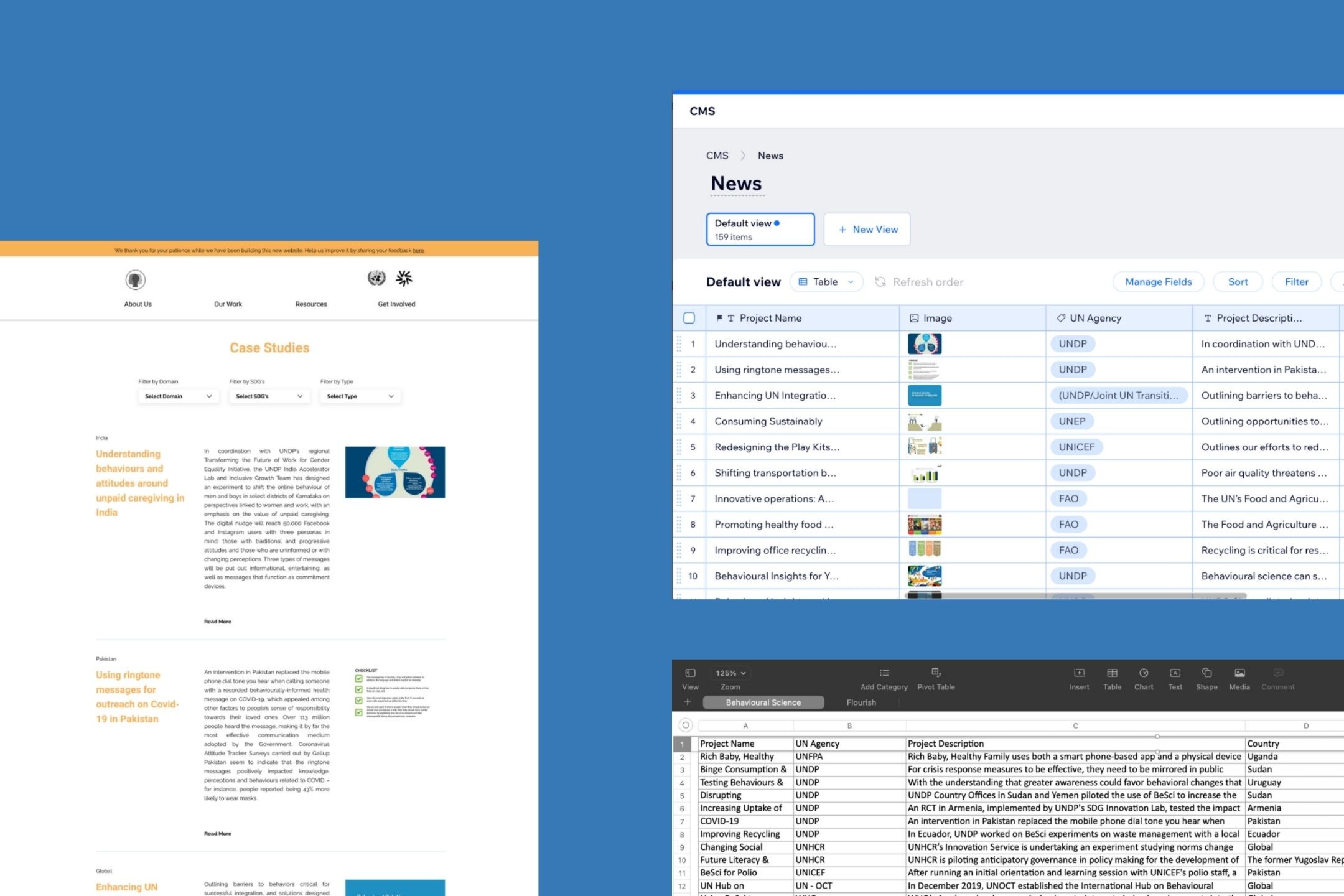
The case study repository was the most wanted feature that didn't exist.
Across every cohort, participants described wanting to see real examples of BeSci applied in the UN and beyond — searchable, filterable by theme, agency, and geography, and in a single place. The current site had some case studies, but they were presented as flat text with no filtering, no visual hierarchy, and no consistent structure.
The final repository was only as good as the content in it. I built the submission template and CMS structure, but I underestimated how much relationship management was required to get entities to actually submit their work. This is a behavioural problem as much as a design problem — contributing takes effort, and effort requires incentive and friction reduction.
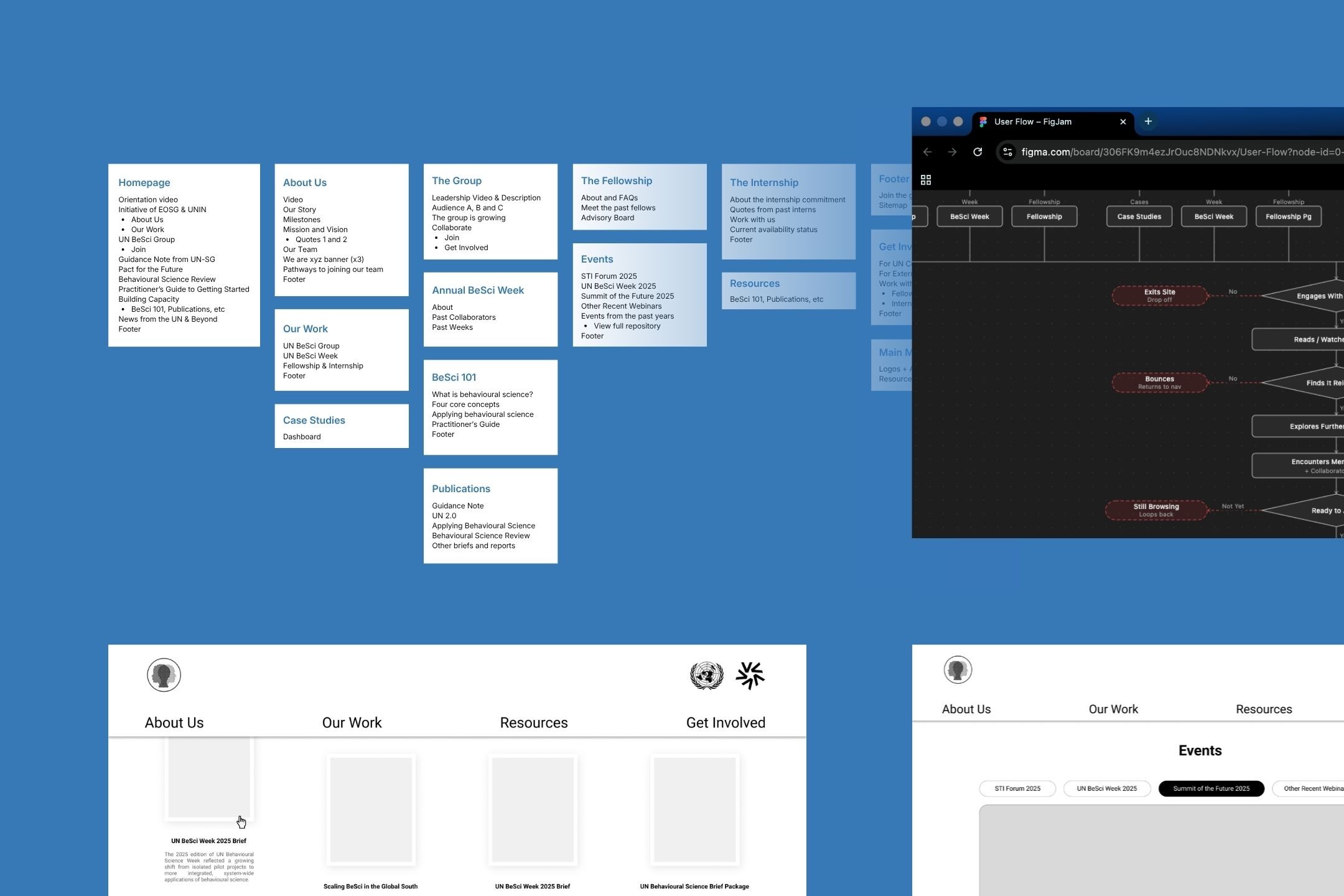
In card sorting workshops, participants' groupings diverged from the existing navigation — a signal that labels weren't reflecting how people thought about the content, creating cognitive load at every decision point.
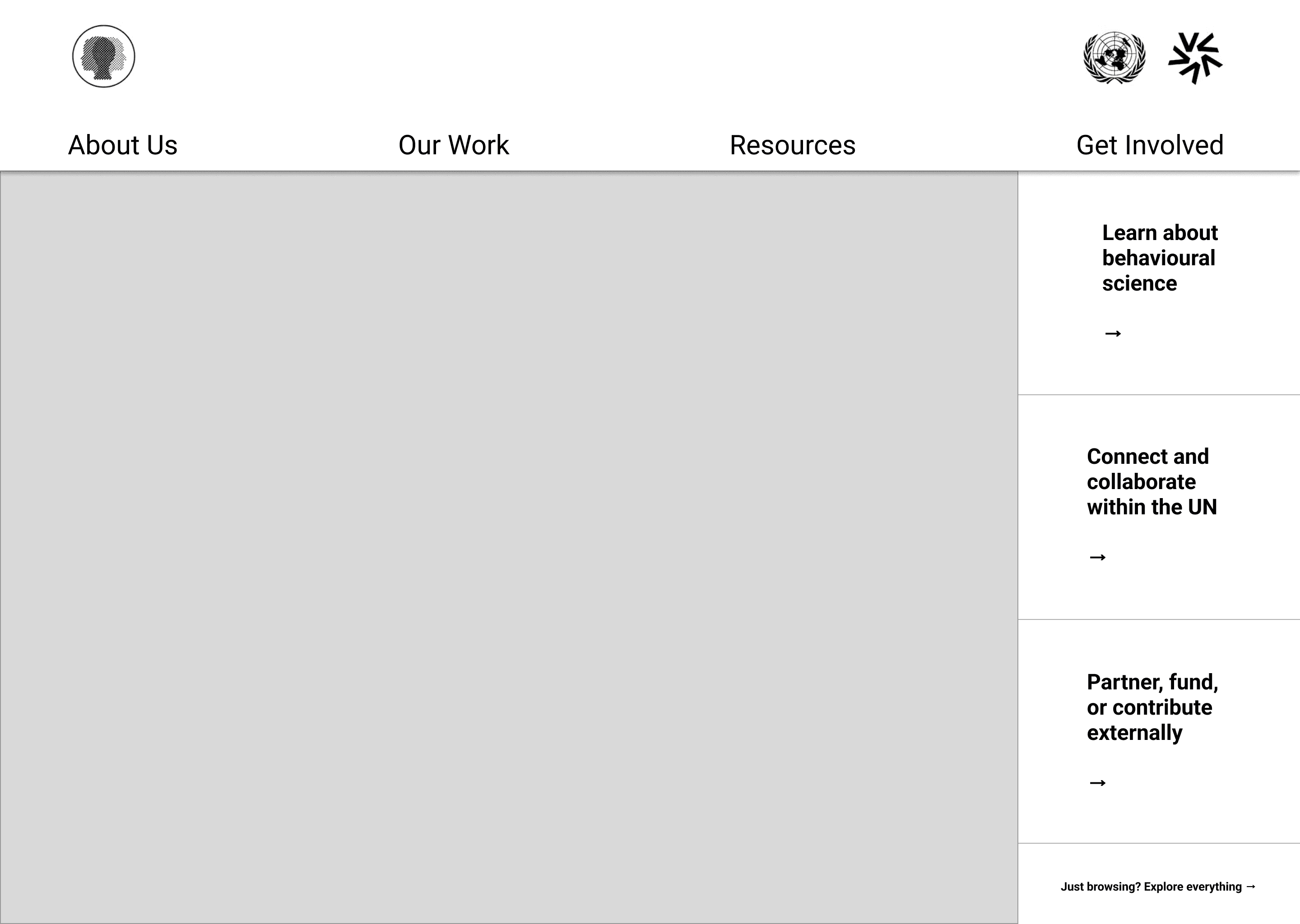
I mapped the full site architecture in FigJam, collapsing six nav items to four, relocating the Fellowship out of top-level navigation, and organising content around visitor intent. From there, I built out the user flow to stress-test every decision point and negative state with the team before moving into mid-fidelity wireframes.
— INFORMATION ARCHITECTURE
The information architecture conflated audience and content. Visitors consistently couldn't predict where content lived.
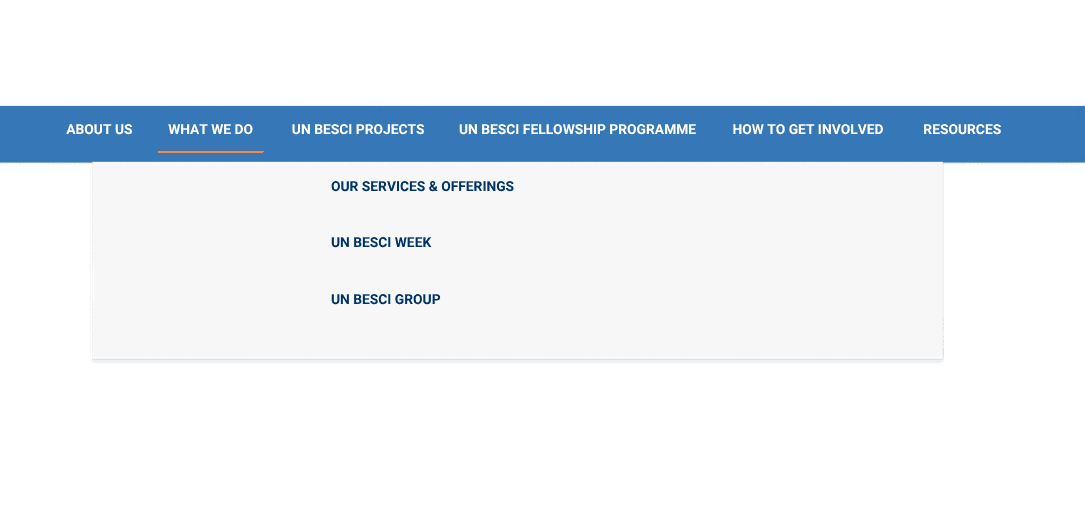
Excessive repetition of "UN BESCI"
Not primary focus - yet primary position
Easy to confuse without adequate context
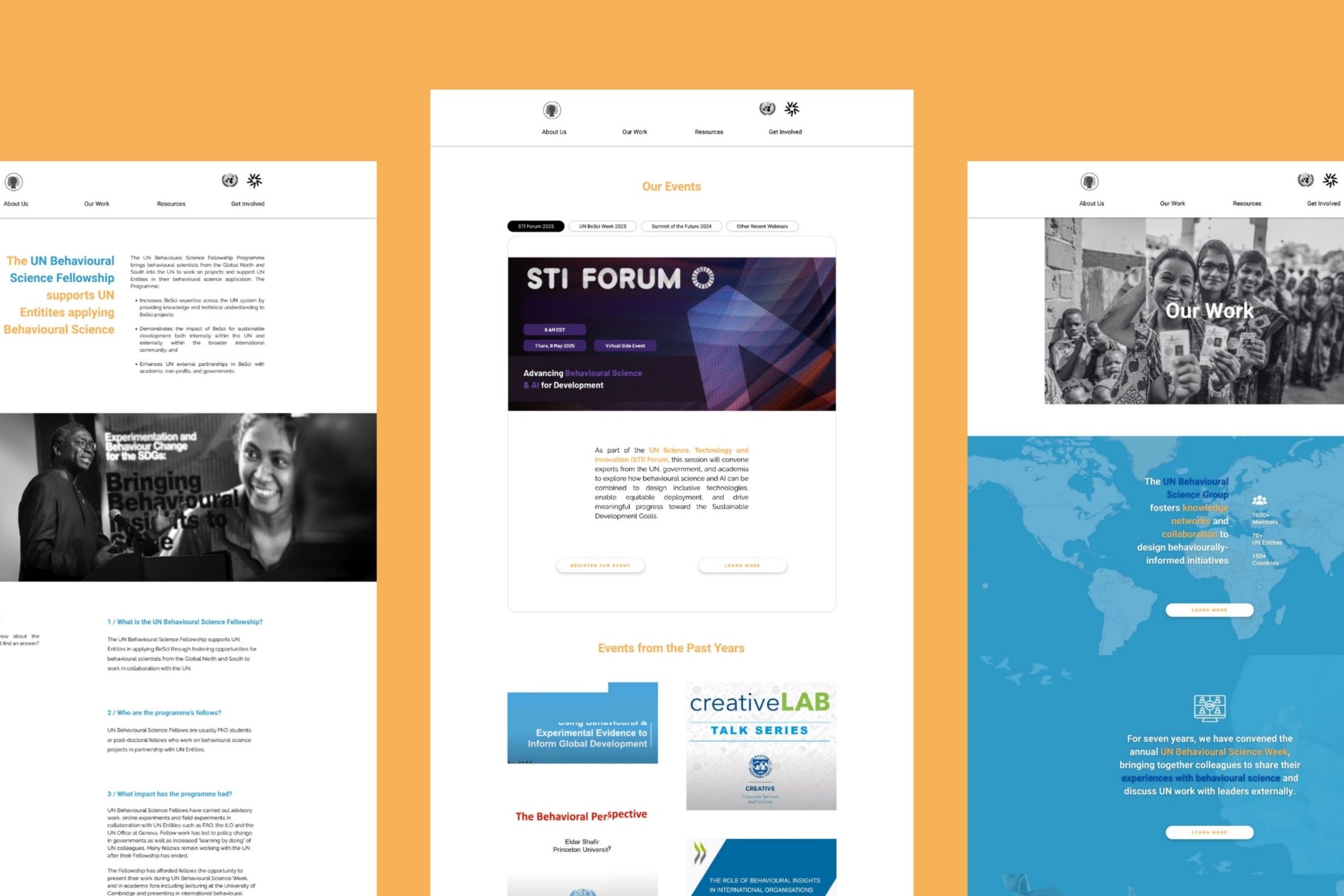
The biggest alternative direction I seriously considered — and ultimately couldn't pursue within the project scope — was a personalised homepage experience that routed visitors to different content based on a short orientation quiz (new to BeSci? UN practitioner? external partner?).
The research supported this as a high-value feature; the implementation complexity didn't fit the timeline or the CMS constraints. This is something I would test further and build into a future iteration.
— HOMEPAGE ITERATION
There were at least three distinct audiences (advanced and early practitioners and external partners), and the site served all of them a little, but none of them fully.
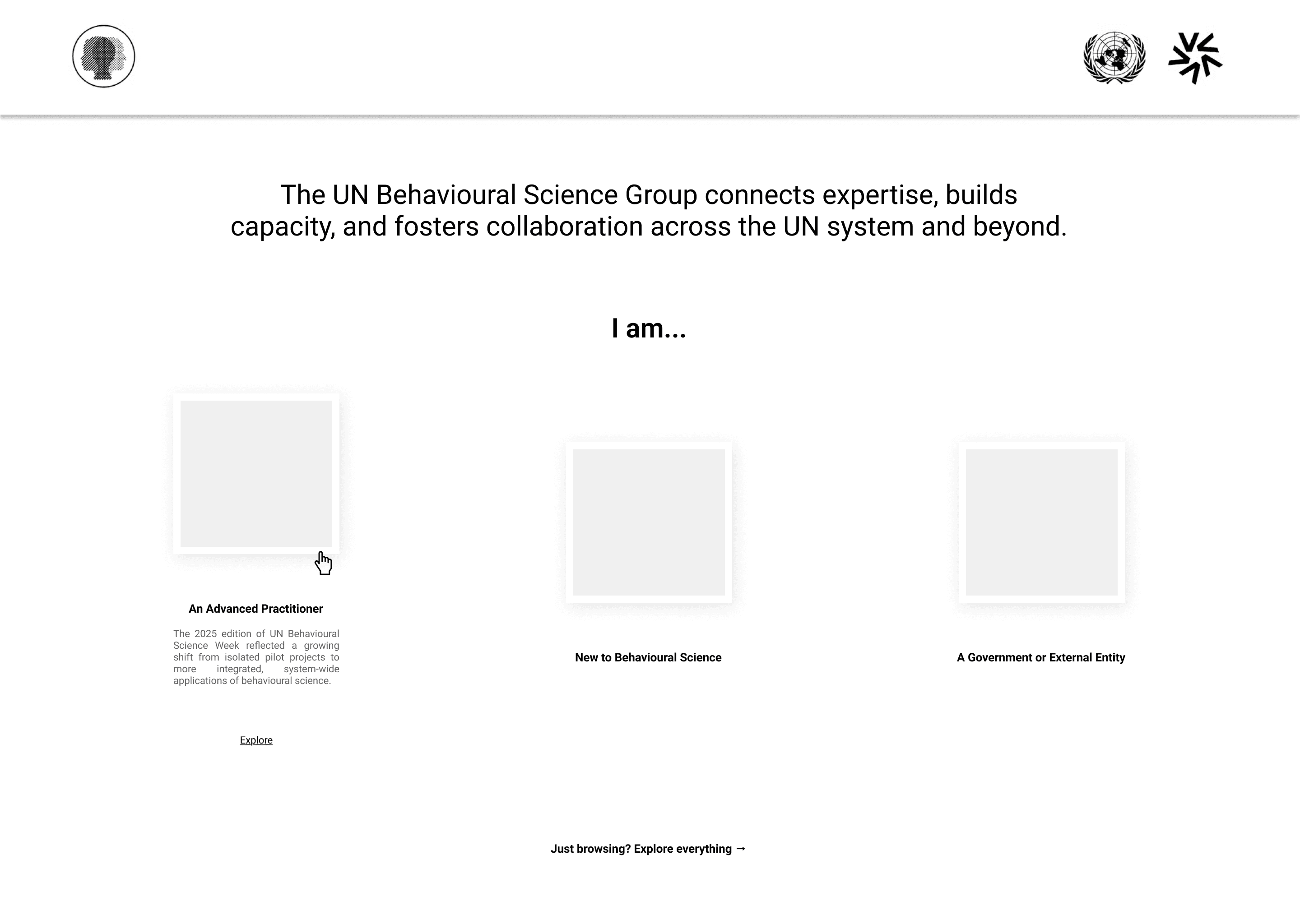
Iteration 2:
Profile-First Entry (Netflix model)
Iteration 3:
Oriented Entry (the blend)
The original banner used a full-bleed photographic image with overlaid text. It was visually dominant and navigationally inert — it consumed the most valuable real estate on the page without helping visitors understand where to go. And next, immediately asked visitors to join the group. Participants cited this as the single most disorienting experience on the site.
"First thing I look for is something very practical. I landed here and didn't know if this website was for me."
— INFORMATION SCENT
The homepage journey surfaced a classic commitment-sequencing failure. Asking for a join before delivering value prioritises the Group's goal over the visitor's.
The redesign provided navigational affordance as a four-fold theory:
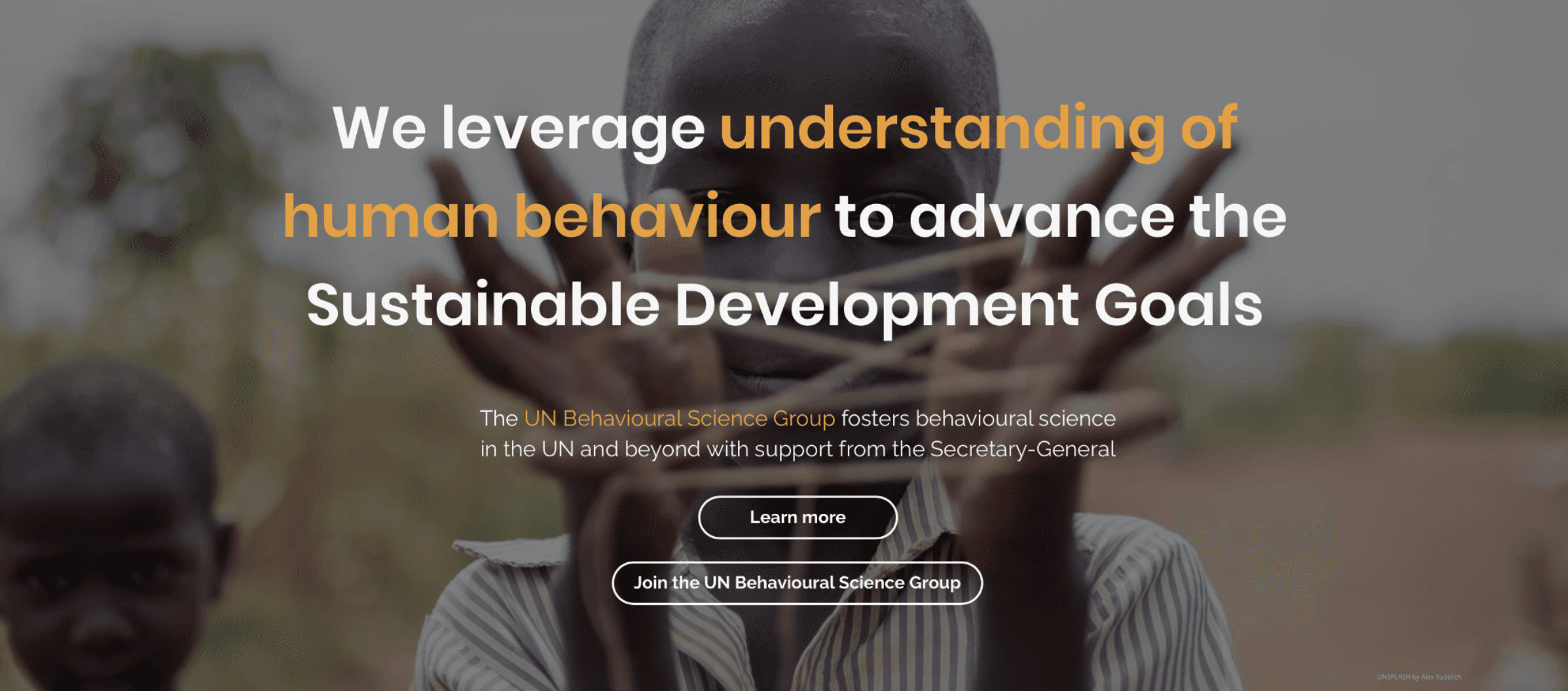

Interruptive experience and premature ask
Social proof signal deprioritized
Image disconnected from content
Figure-ground contrast failure; accessibility?
— PROBLEM
Stakeholders across focus groups described the website consistently: text-heavy, hard to navigate, and disconnected from the group's actual ambition. As put by a participant: "a behavioral science website that didn't look behaviorally designed."
The site had no coherent theory of who it was for or what it was trying to get them to do. It treated all visitors the same — whether a seasoned UN behavioral scientist seeking peer collaboration, a programme officer who had never heard of nudges, or an academic considering a fellowship. The result was a site that served no one particularly well.
Meanwhile, the group's most important asset — its actual work — was buried. A practitioner's guide that took months to produce sat behind multiple clicks. Case studies from 40+ member states were scattered or missing entirely. BeSci Week recordings, the group's most compelling proof of scale and relevance, had no clear home.
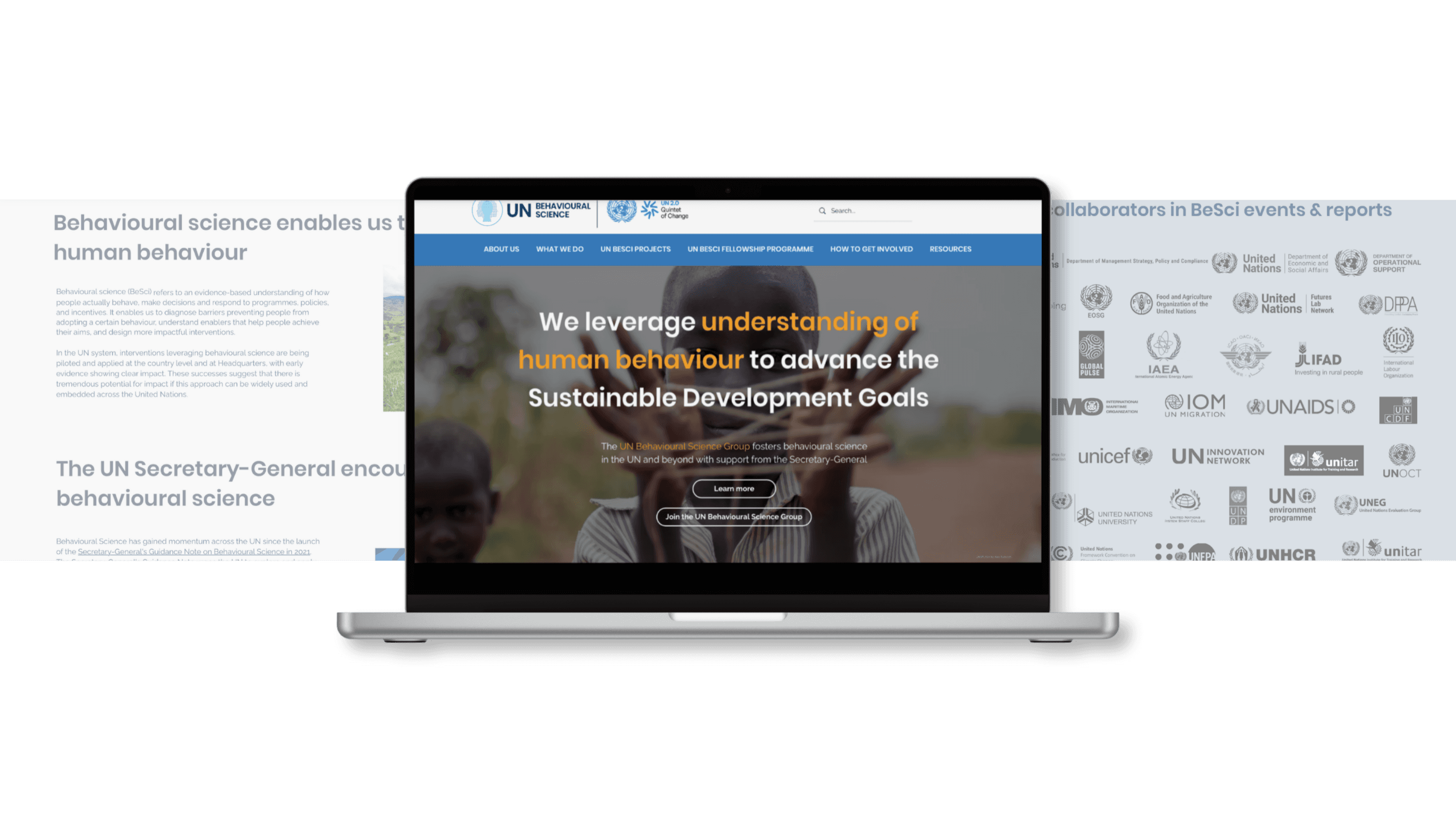
Lacking hierarchy and consistency
Visually dated and institutional
Cluttered and
content heavy
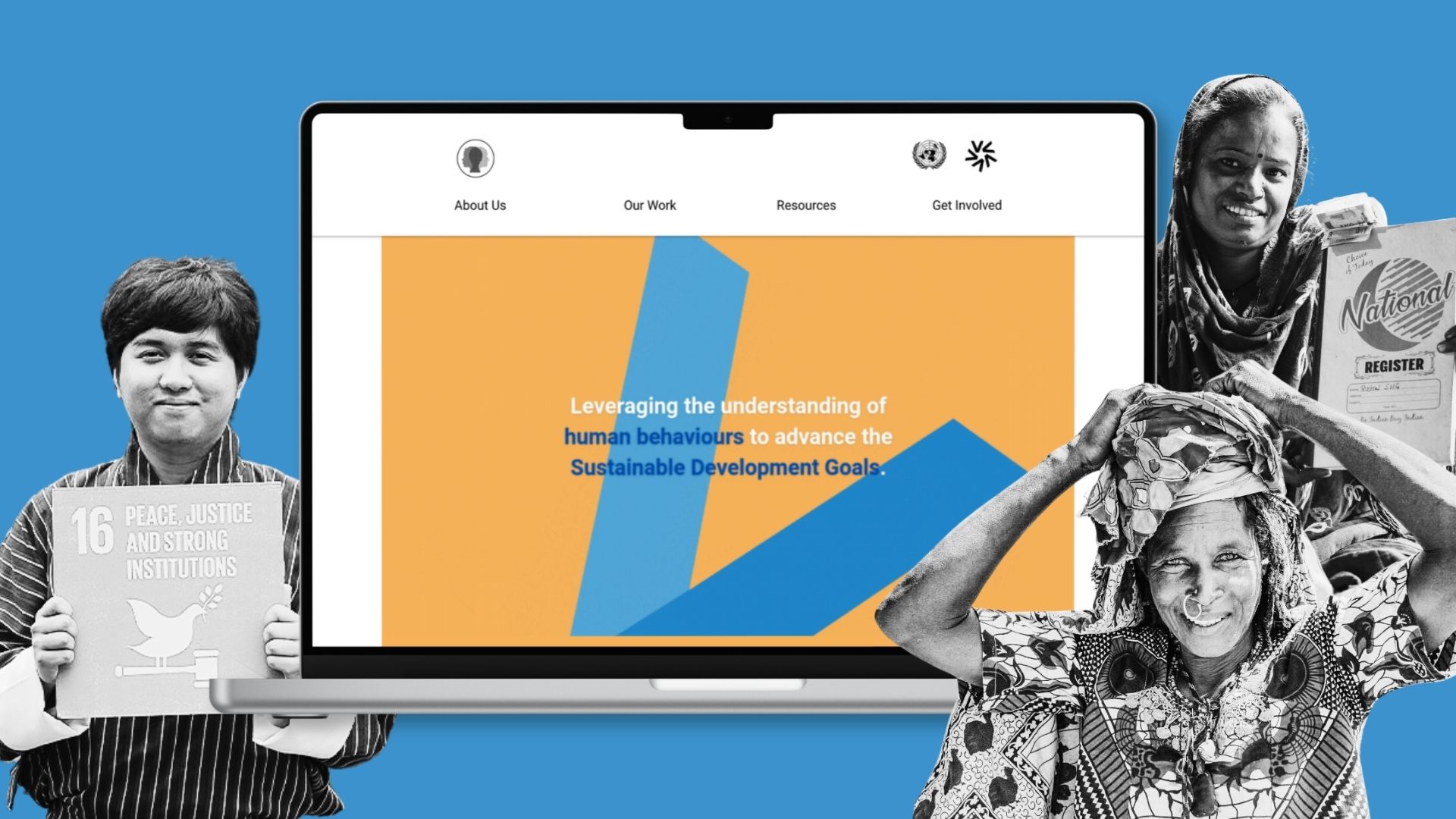
Redesigning the United Nations Behavioural Science Group Website
From Webinar Hub to Growth Engine: By 2024, the Group had the Secretary-General's mandate, inclusion in the UN 2.0 Quintet of Change, and a network spanning 70 entities in 150 countries. And yet, the website, its primary public-facing surface, read more like an intranet page than the home of a key initiative.
Company: United Nations Behavioural Science Group ↗
Timeline: 4 months • 2025
Role: Product Designer & Researcher
Platform: Desktop/Mobile Web
Tools: Figma, Miro, Flourish, CMS, Claude Code
Team:
@vani (me) - Product and Content Design
@marymaclennan - Group Lead
@johannaojochim - UNIN Lead
@gethsemanieyap - Digital Comms, UN2.0
My Role:
Led the end-to-end redesign — from a 4-cohort research study to a new information architecture, content strategy, and case study repository — turning a passive information page into an active membership growth system.
Impact:
Drove 804% growth in site sessions and 835% growth in unique visitors, with organic search accounting for 59% of all traffic (zero paid acquisition). Top content pages averaged 10–22 minutes time-on-page, indicating the IA and content were driving genuine engagement.