Portside NY
High Tide
High Tide
An AR game that turns flood survival into second nature
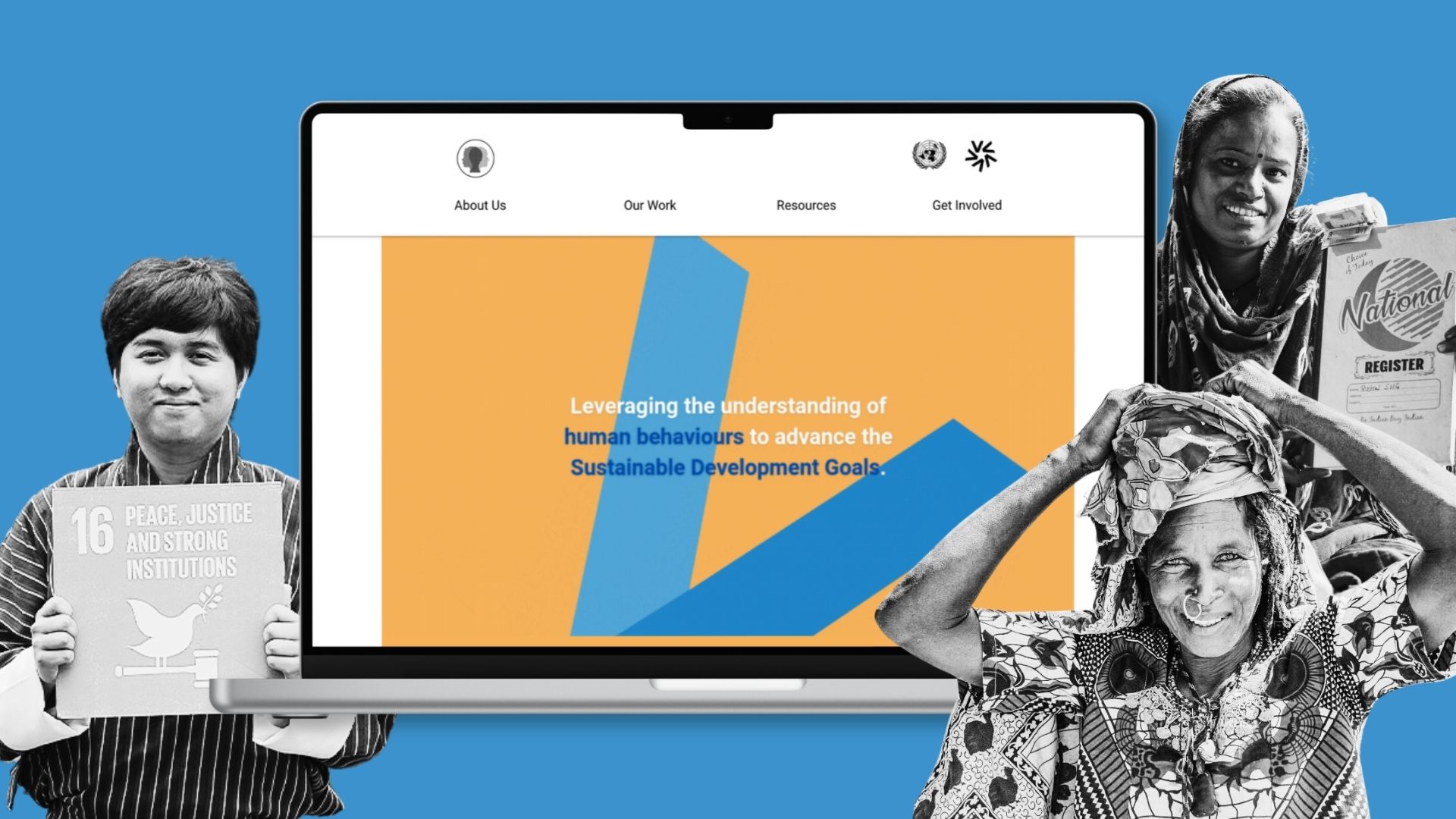
Redesigning the United Nations Behavioural Science Website
The web redesign that scaled UN behavioural science globally
United Nations
Redesigning the United Nations Behavioural Science Website
More Case Studies
High Tide
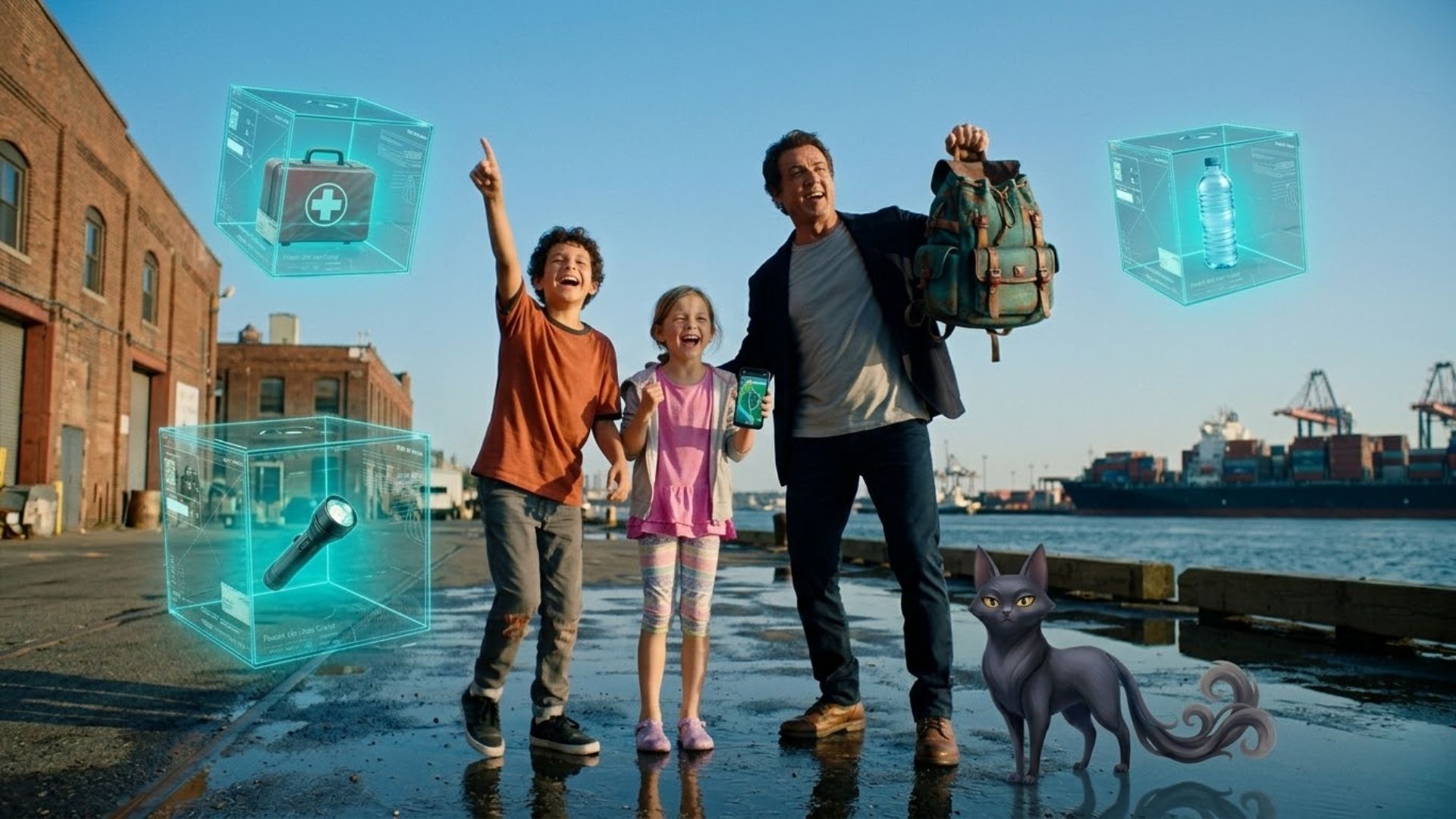
Inspired by Pokémon Go, High Tide turns flood readiness into a collaborative scavenger hunt where players gather emergency resources, navigate rising flood conditions, and assemble a real-world go-bag while exploring their own neighborhood.
Company: PortSide NY↗
Timeline: 12 months • 2024-25
Role: Product Designer & Researcher
Platform: iOS (AR)
Tools: Figma, Adobe Aero, Claude Code
Team:
@vani (me) - Product Design and Design Research
@sonimakatara - Systems Design and Design Research
@carolinasalguerro - Project Partner - Content
@peterrothenburg - Project Partner - GIS
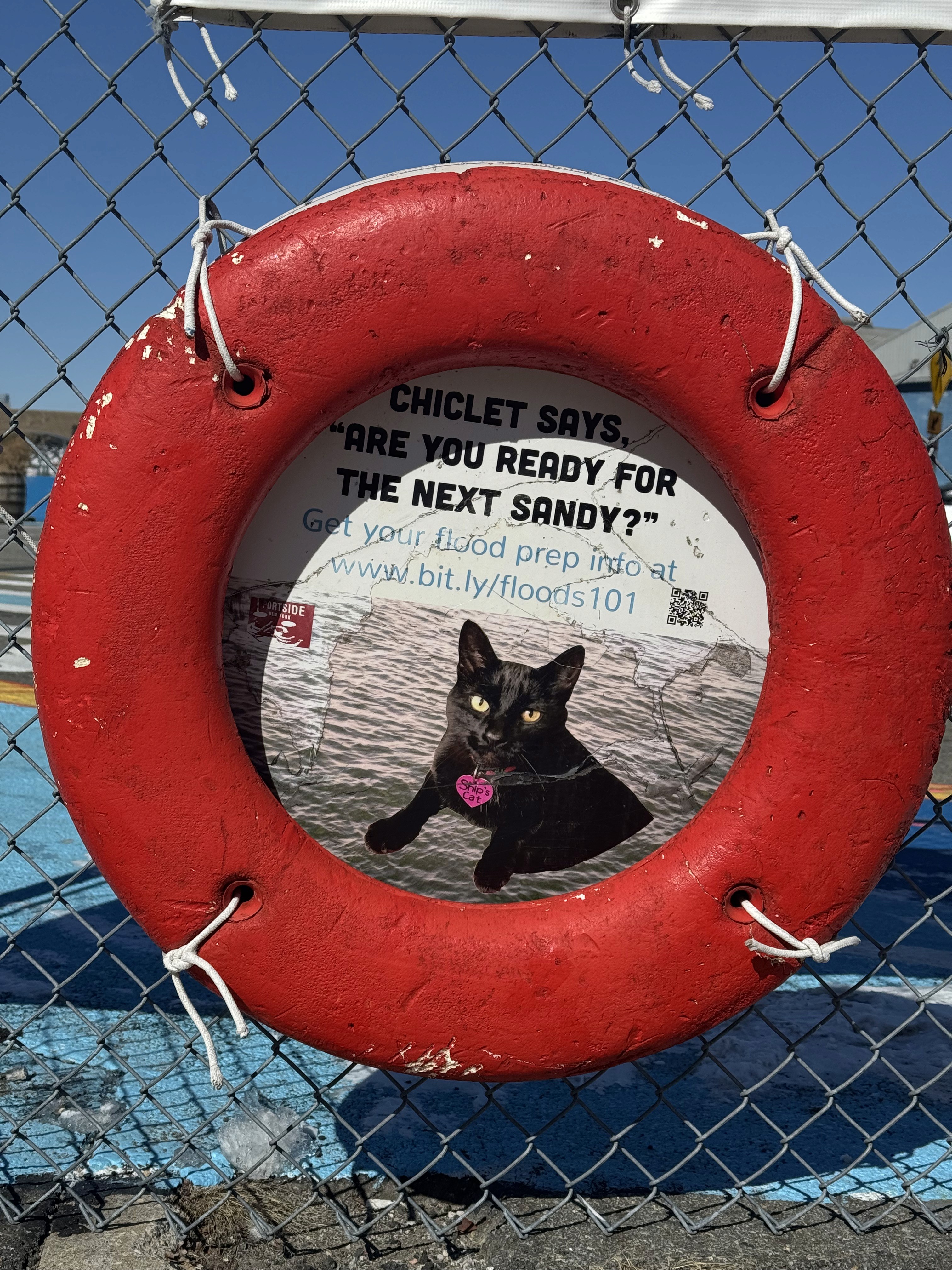
@shipcatchiclet - Emotional Support
My Role:
Led end-to-end product development — from collecting community insights and translating them into gameplay mechanics to designing the core systems, interactions, and experience architecture.
Impact:
4 of 5 players (n=60) correctly demonstrated preparedness behaviors 7 days after playing — without prompting. Behavior change was assessed against a pre-game baseline survey.
Residents know floods are coming. They still don't prepare. The gap isn't knowledge. It's imagination: people cannot prepare for a future they can't picture themselves surviving.
— PROBLEM
Existing flood preparedness tools — apps, drills, government pamphlets — fail at the same point: they deliver information but don't change behavior.
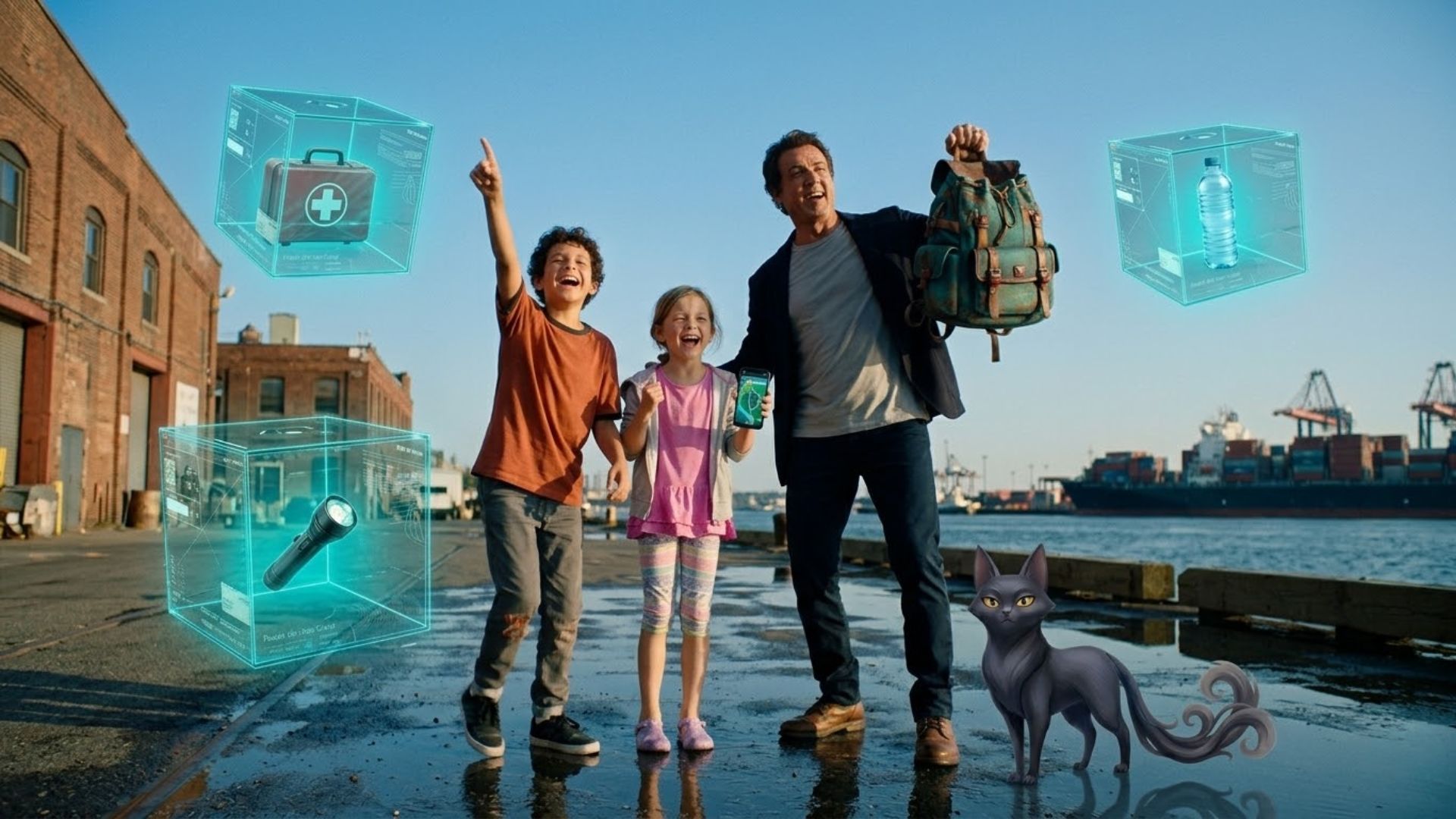
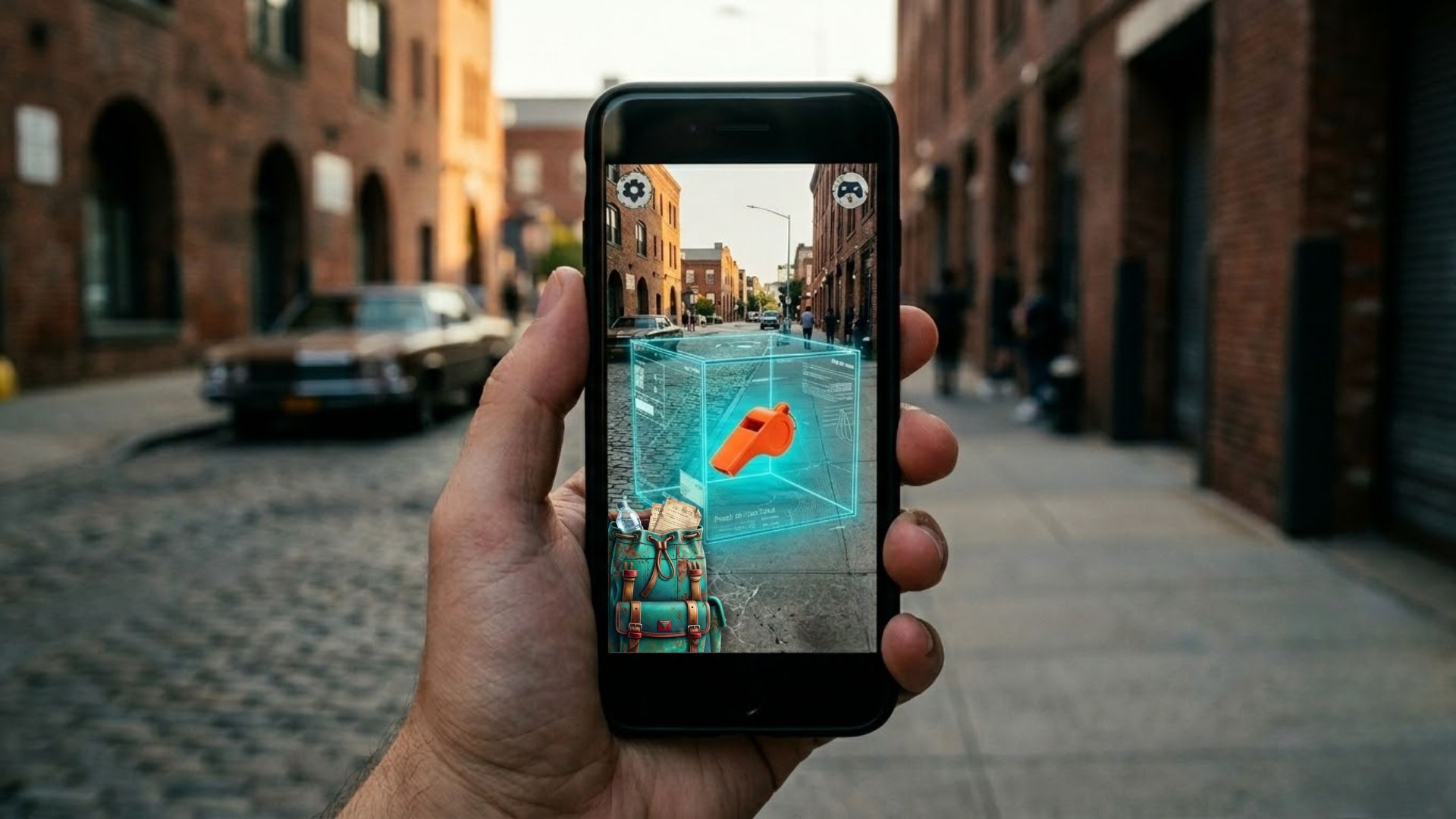
During interviews, residents frequently mentioned that they intended to build a go-bag but rarely followed through. The main barriers were lack of urgency and the perception that preparedness required a large upfront effort.
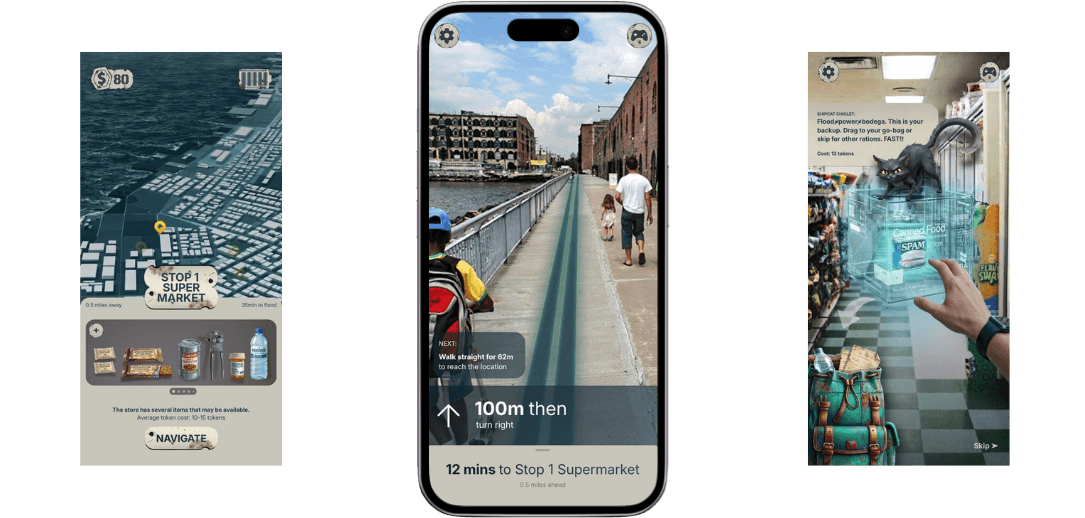
As players explore, they collect assets through:
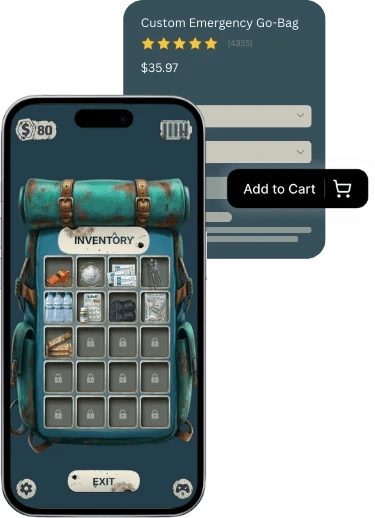
Digital go-bag
Knowledge repository
Direct purchase of go-bag
Guidance on what to include in a go-bag is often confusing. We designed a checklist system that turns information into an inventory players can build in real life.
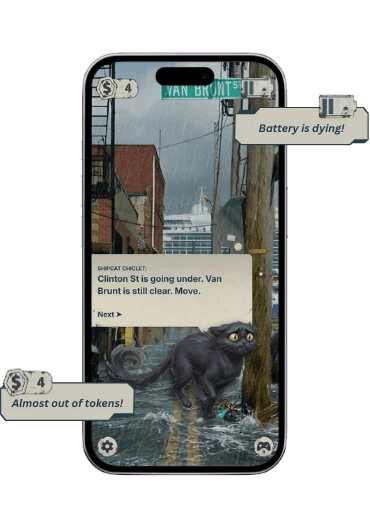
Each session operates within a fixed time window, represented by the player’s phone battery level and an approaching flood. As time runs out, certain parts of the map become flooded while others remain safe zones.
Players also operate within a fixed resource budget. Each supply item has an associated cost, requiring prioritizing essentials rather than collecting everything available.
Preparedness decisions are often constrained by time and resources. In-game constraints were built to mimic real scenarios.
— EDGE CASES
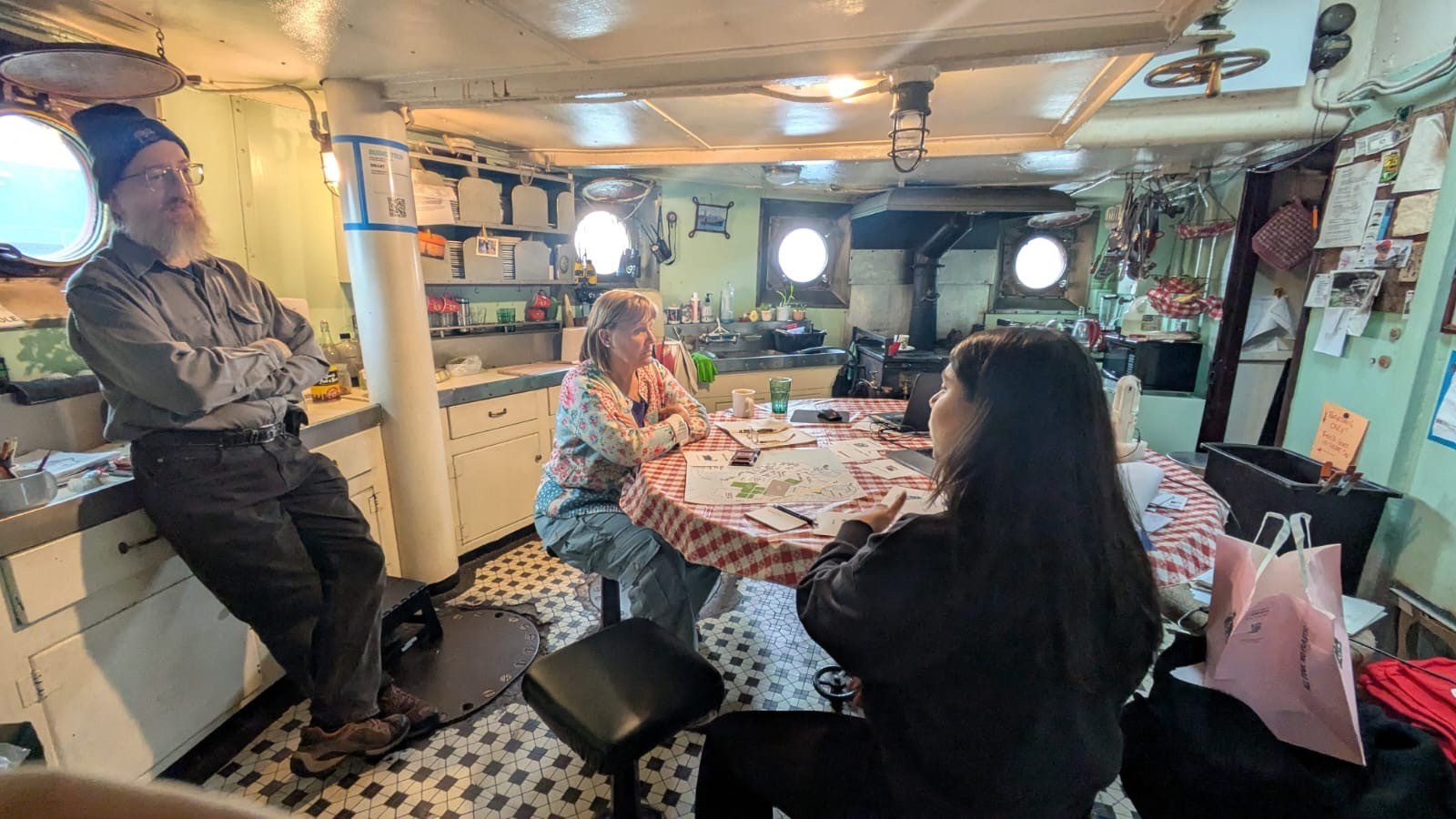
We began by asking a simple question with residents and educators in Red Hook: if a flood warning came tomorrow, what would you actually do? Across workshops and interviews, three gaps surfaced repeatedly:
People know floods are coming, but don’t have a go-bag.
Where to go or which routes will flood first is not known.
Preparedness advice feels disconnected from their own lives: “This can never happen to me.”
Rather than building another information tool, we reframed preparedness as a practice problem: people need to rehearse what to do before the emergency arrives.
From a series of early experiments — board game simulations, card-based scenario tests, and neighborhood scavenger challenges — a clear gameplay loop emerged: explore your neighborhood, gather emergency resources, and reach a safe zone before the flood arrives.
— SOLUTION
A game that forces players to inhabit that future — with their own street, their own neighbors, their own bodega — before it arrives. High Tide uses situated AR and real-world scavenger missions to make preparedness visceral, local, and actionable.
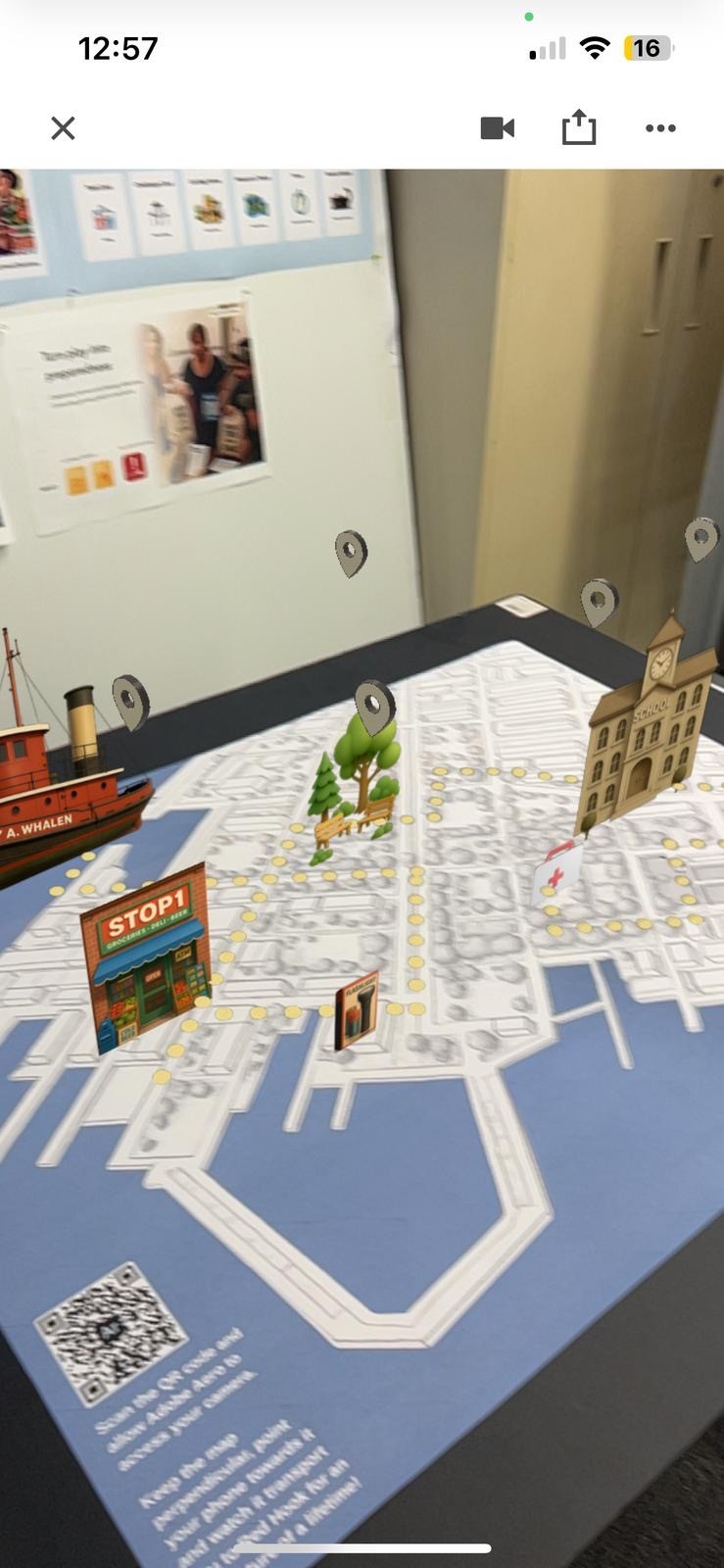
During early workshops and interviews, participants consistently said they had seem some flood map, but never paid attention because of their complexity. Existing tools provide detailed environmental data but require multiple layers, technical interpretation, and desktop-style navigation. Our users wanted something simpler that answered practical questions: Which streets flood first? Where can I go? Where do I find supplies?
The Explore feature addresses this through a simplified neighborhood map seeded with open NYC datasets, including FEMA flood zones, NYC Department of City Planning flood hazard layers, FloodNet sensor data, city shelter locations, and local infrastructure points. Instead of exposing all datasets directly, we translated them into three gameplay-relevant categories: risk zones, supply locations, and safe zones.
— FEATURE SPECIFICATIONS
Identify Location
Navigate
Discover and Collect
Public flood maps like NYC’s Flood Hazard Mapper↗ and FloodNet DataViz↗ exist with dense data, but are difficult to interpret. We built a simple map that surfaces flood risk, resources, and infrastructure directly within gameplay.
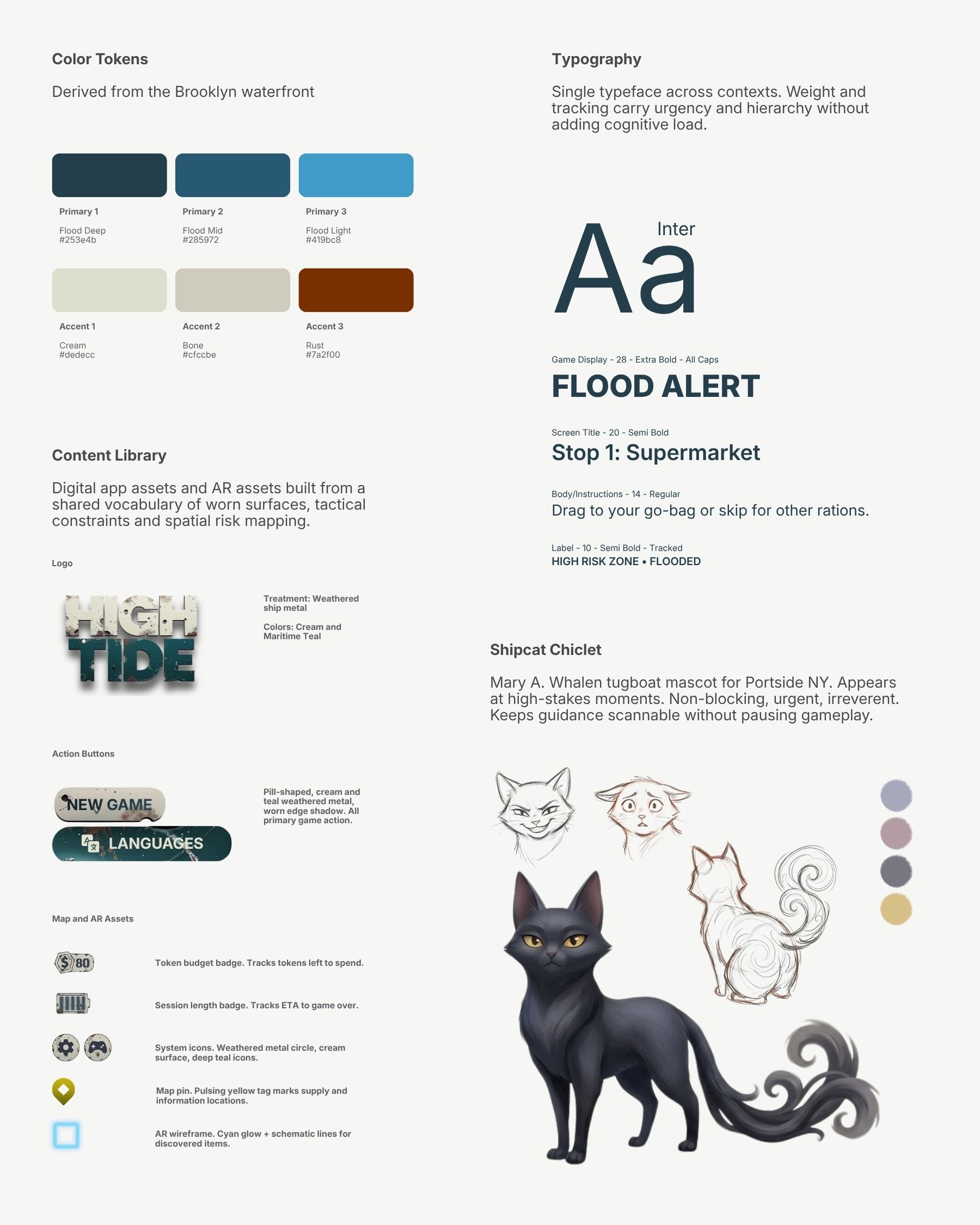
Emergency tools often rely on institutional visual language — muted palettes, dense warnings, and alarm-heavy iconography — which many participants said made them disengage quickly. The game required 60+ unique screens spanning onboarding, map exploration, AR camera interactions, inventory management, flood simulation states, and post-game outcomes.
To maintain consistency and enable efficient design-to-dev transition, I developed a design system built from reusable components and their interaction states. Each component was designed with defined states — such as default, collected, and critical — allowing the interface to communicate risk levels and gameplay progress without introducing new patterns.
— VISUAL DESIGN
Received direct feedback from 30+ participants through game nights and tabletop discussions.
10,000+ people reached across two Eventbrite launch events, with minimal ad spend. 45 RSVPs in 7 days.
32 offline sign-ups from physical poster campaign in one week, validating community interest independent of social reach.
7+ new cross-sector partnerships formed: local government, education institutions, and community organizations as direct outputs of the pilot.
— VALIDATION
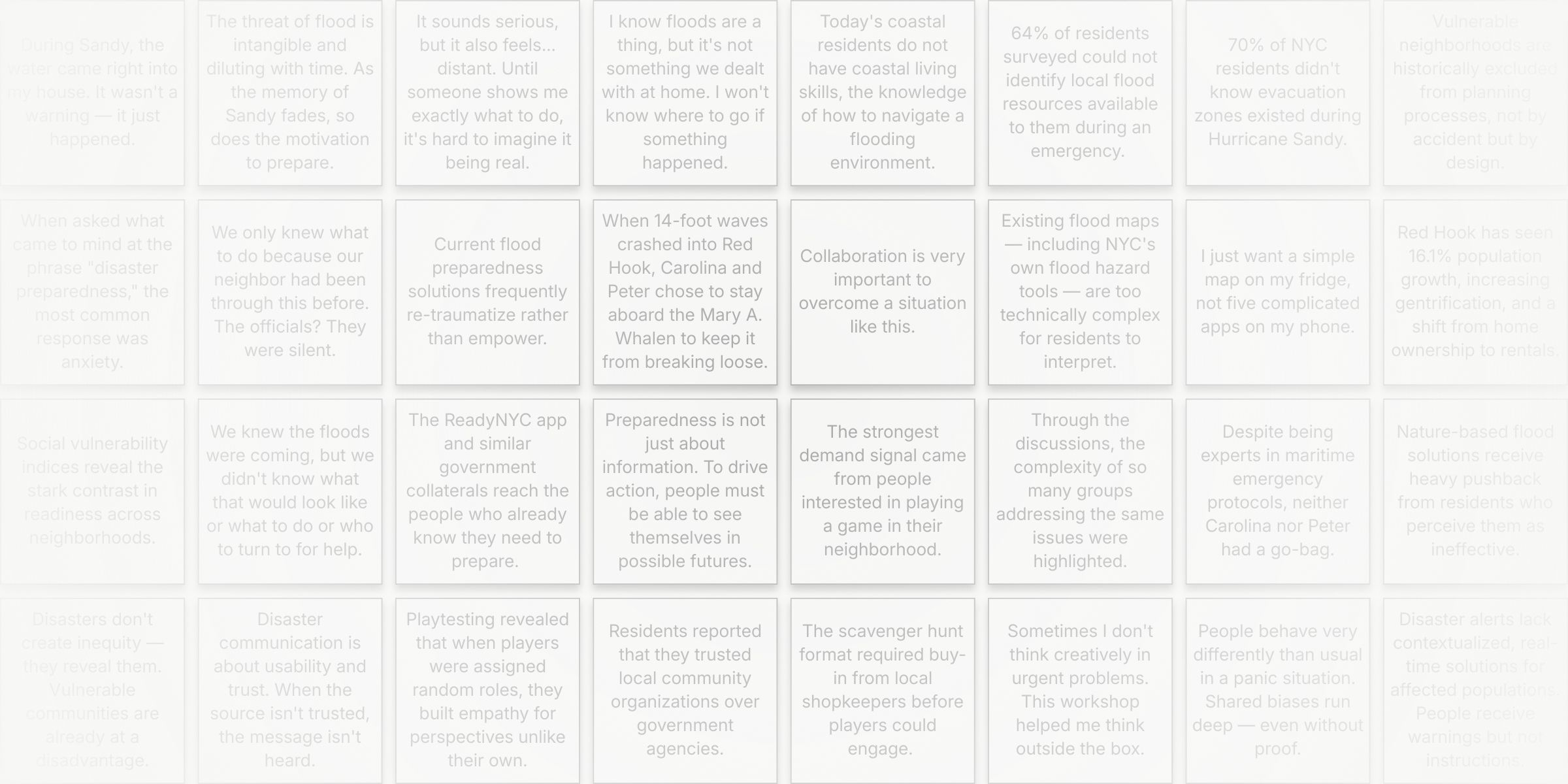
Validated before a single line of code was written or screen designed: Before committing to full development we iterated the gameplay using low-fidelity versions and tested concept adoption through 3 guerilla campaigns.
— TAKEAWAYS
Many participants had lived through severe hurricanes, so research and design had to be trauma-informed. Framing preparedness as a game allowed people to rehearse response behaviors in a low-stress environment without reliving those experiences.
The system only works with strong local trust. Scavenger missions required buy-in from shopkeepers and neighborhood partners; Portside NY’s credibility in Red Hook made it possible to anchor gameplay in real businesses and community spaces.
With transparent and ethical use, aggregated player behavior could surface preparedness gaps before disasters occur — creating a feedback loop where grassroots insights inform policy and allowing the game framework to adapt to risks like floods, wildfires, or earthquakes in other cities.